Orchids, Asparagus etc.
Welcome to the Whilst Out Walking Parallel Universe. This post mirrors today’s newsletter on the Substack site (https://1001species.substack.com) with a little something extra at the end for those of you who have found their way to this location.

This is the most recent post in a series that has been running for several weeks and which provides a very simplified introduction to the main families of Flowering Plants. The pervious flower posts can be seen on the Substack site where you will also find informational posts about insects. in each case, the object is not to teach you how to identify individual species, rather to make it easier to know at least what group or family you are seeing – narrowing the field, as it were.
Family Poaceae
Now for some of the field grasses. In diversity alone there are over 12,000 species of grasses in this family worldwide in 770 genera and so undoubtedly, there are more than the few I have records of from this area. Grasses are the fifth‑largest family of flowering plants – yes, they do flower. They thrive in almost every terrestrial habitat, from tropical rainforests to arid deserts and high mountains. All of the world’s major cereal crops belong to this family: wheat, rice, maize (corn), barley, sorghum, oats, millet and rye. Their dense, fibrous root systems bind soil, reduce erosion, and store large amounts of carbon underground, contributing significantly to carbon sequestration. Many species can sprout new shoots from basal meristems even after heavy grazing or fire, allowing grasslands to recover quickly and supports the grazing habits of countless herbivores—from insects to large mammals. The flowers are typically wind‑pollinated and lack showy petals. Instead, they produce lightweight, feathery stigmas and stamens that release pollen en masse, turning entire fields into “pollen clouds” that travel considerable distances.
I would point out at this time that grasses are not by any means the easiest plants to clearly identify but for all that I know of some 19 species that do grow where I live. They range from the invasive, pest species of Common Reed (Phragmites australis) that grows so proudly in the ditches alongside Highway 20 to typical grasses many of us have in our lawns and which has established itself through the region – Timothy Grass (Phleum pratense) and Barnyard Grass (Echinochloa crus-galli).
An interesting and unusual feature of grasses is that the meristem – that is the growing part – is near the bottom of the plant instead of the more usual tips of stems and blades which means that grasses can quickly recover from cropping at the top by grazing animals or fire.
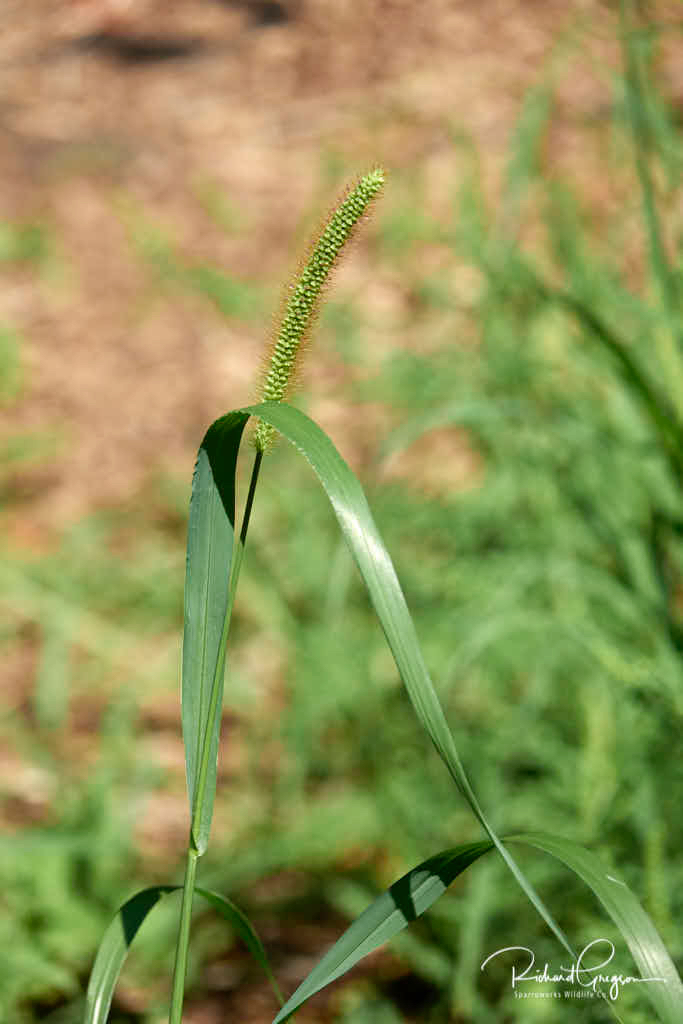
Yellow Foxtail
Family Orchidaceae
Mostly we think of orchids as rare and exotic flowers from the hothouse and not something to be found out and about in the fields and forests. In fact there are over 28,000 species worldwide (even more than the grasses mentioned previously this week, and at least three of them growing just down the road from where I am writing this. Albeit they are not always easy to locate. The flowers are distinctive and share some features such as bilateral symmetry of the flower (zygomorphism), many flowers with features that make them at least appear to be turned upside down, a nearly always highly modified petal (labellum), fused stamens and carpels, and extremely small seeds.
Orchids have evolved remarkably intricate pollination mechanisms. Many species mimic the appearance, scent, or even the tactile feel of female insects to attract male pollinators. Others produce nectar, visual guides, or trap insects temporarily to ensure pollen transfer. Orchid seeds are minute, like dust, and contain virtually no nutrient reserves. To germinate, they have to form a symbiotic relationship with specific mycorrhizal fungi that can supply the necessary carbon and minerals. Some orchids can live for decades, and many take several years—sometimes even a decade – to reach flowering maturity.
Also, not all orchids have bright, eye-catching colours. For example you may come across Broad Leaved Helleborine (Epipactis helleborine) in our garden. It is originally from Europe, but now widely distributed across eastern and central Canada and the United States. It flowers in the late summer and early fall, producing up to 50 small flowers with greenish purple petals and sepals, and a divided labellum: the innermost part, closest to the column, is curved into a bowl-like shape and is purple or brown, often glossy on the inner side; the outer part is triangular and pink, green or white. It produces 3-10 leaves on its stem, which is covered with fine hairs. Indeed they are not flashy orchids at all, more the sort of green plant you wouldn’t give a second thought to. They are to be found in disturbed habitats such as lawns, sidewalks, gardens, and roadsides as well as in forests, swamps, and riverbeds.
More colourful orchids noted on the West Island are the Pink, or Stemless, Lady’s Slipper (Cypripedium acaule) and the Yellow Lady’s Slipper (Cypripedium parviflorum) of which specimens have been found in Senneville and in the meadow parts of the Anse-à-l’Orme nature park.
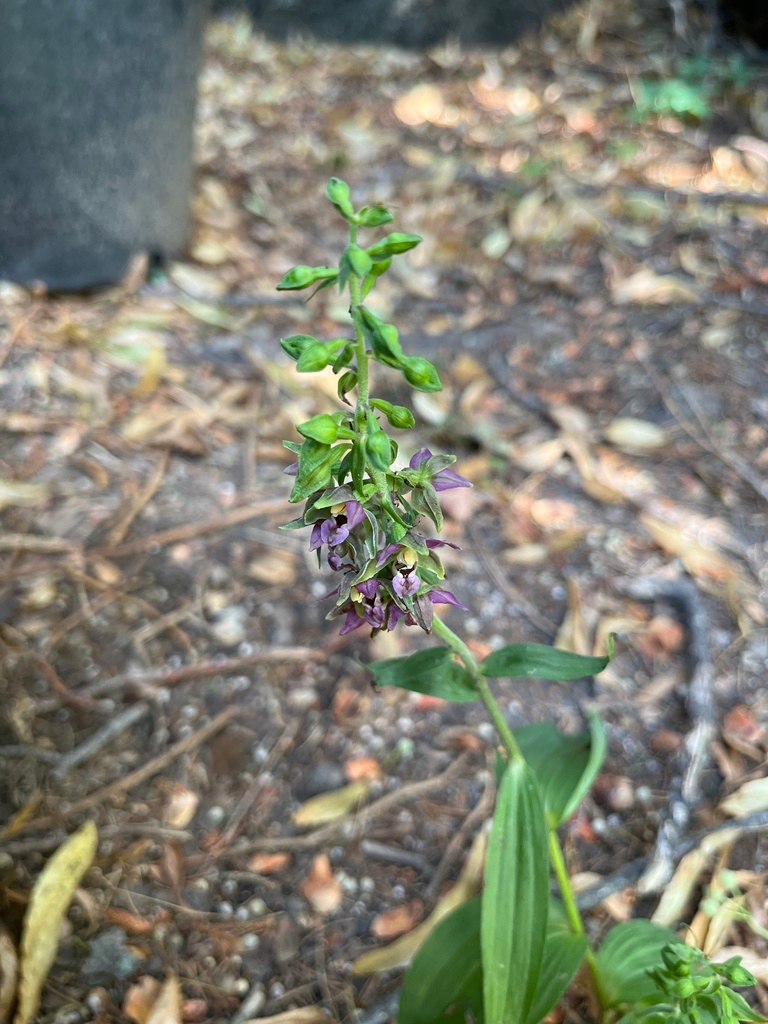
Broad leaved Helliborine
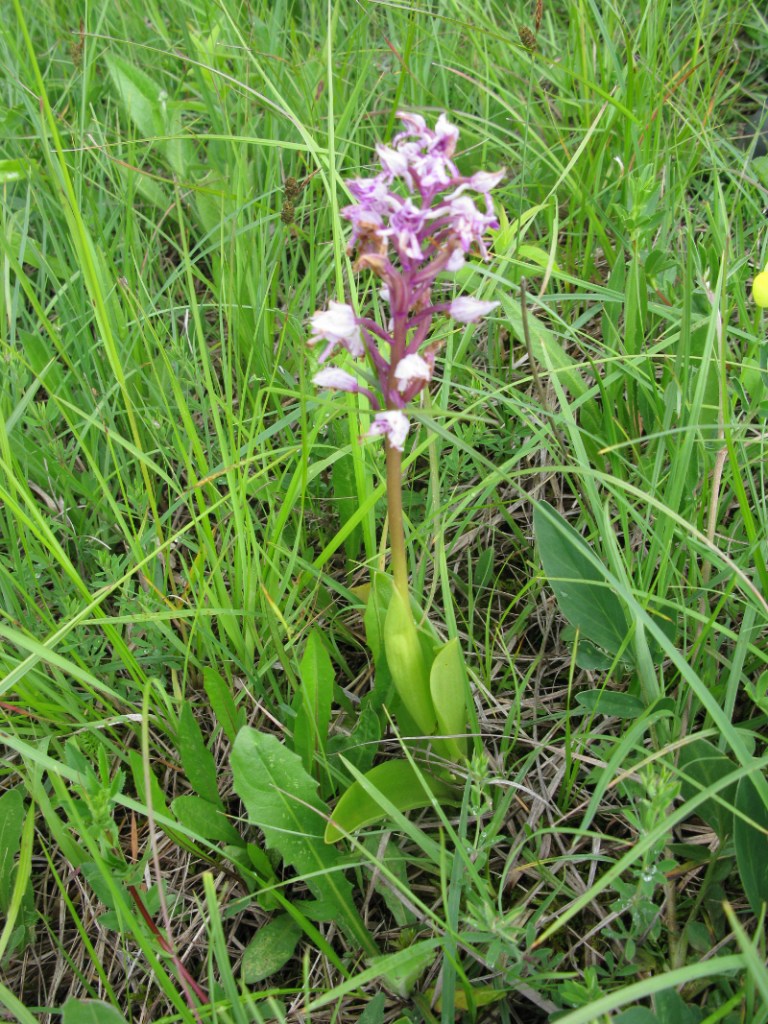
Military Orchid
Family Asparagaceae – Asparagus
A taxonomically complex family, some q50 genera, that was once included with the Lillies but is no more. Expect changes in the future as botanists go about their work. These plants are all monocots rather than dicots. Almost all the plants found here are non-native.
Despite the family name, don’t expect all species to look like the plants we eat. For example there Agave, that store water, allowing them to thrive in arid deserts. Others, like Hyacinthoides (bluebells), are adapted to shaded woodland floors, emerging early in spring before canopy cover blocks light. Then we have the Hostas that grow in our gardens. None of them at first glance anything like “asparagus”.
In this area members of the family include European Lily of the Valley (Convallaria majalis), two species of Squill, the Canada Mayflower (Maianthemum canadense) and False Soloman’s Seal (Maianthemum racemosum).
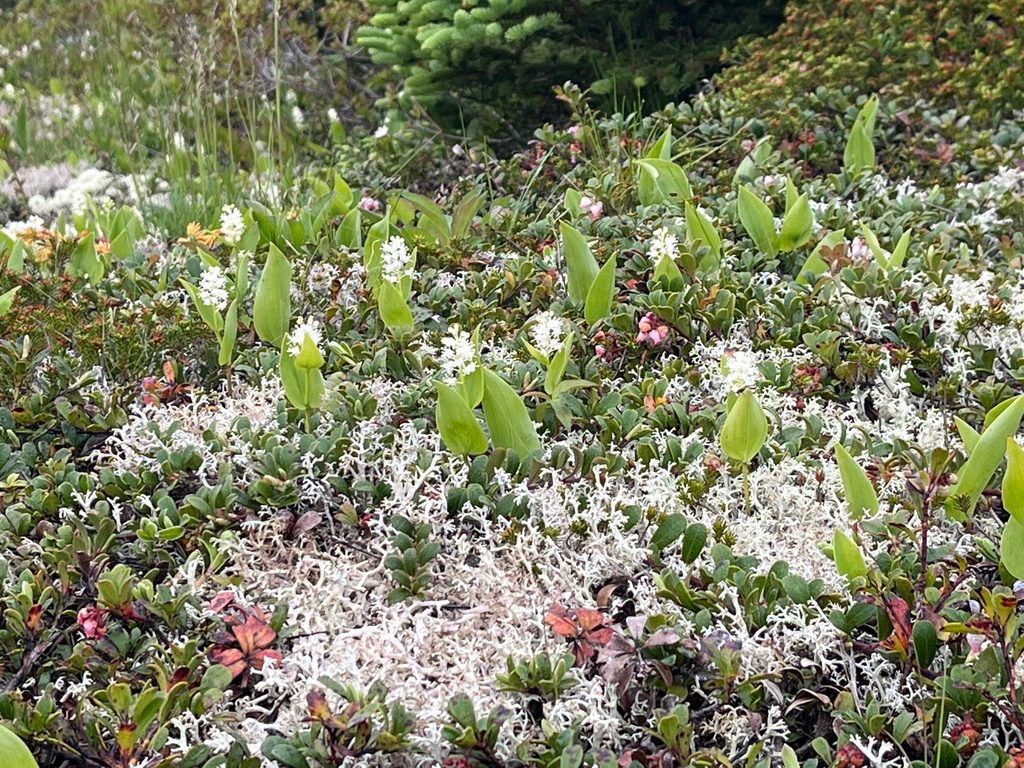
Canada Mayflower
Family Amaryllidaceae
Common Snowdrop (Galanthus nivalis) – is one of my favourite flowers if only because we wait to eagerly for them to push up through the snow in late March or early April – is the easily seen species of this family and may be present in your garden. Planted and garden escaped Wild Daffodils (Narcissus pseudonarcissus) are related, was are the Hipeastrum (Amaryllis) grown in many homes to flower around Christmas time.
Canadian Meadow Garlic (Allium canadense) is the actual native representative of the family. It grows about 18 in. tall and can spread quite freely when well sited. It is vulnerable mostly because people pick it in the wild and can deplete or eradicate natural stands. Please leave it alone if you find any.
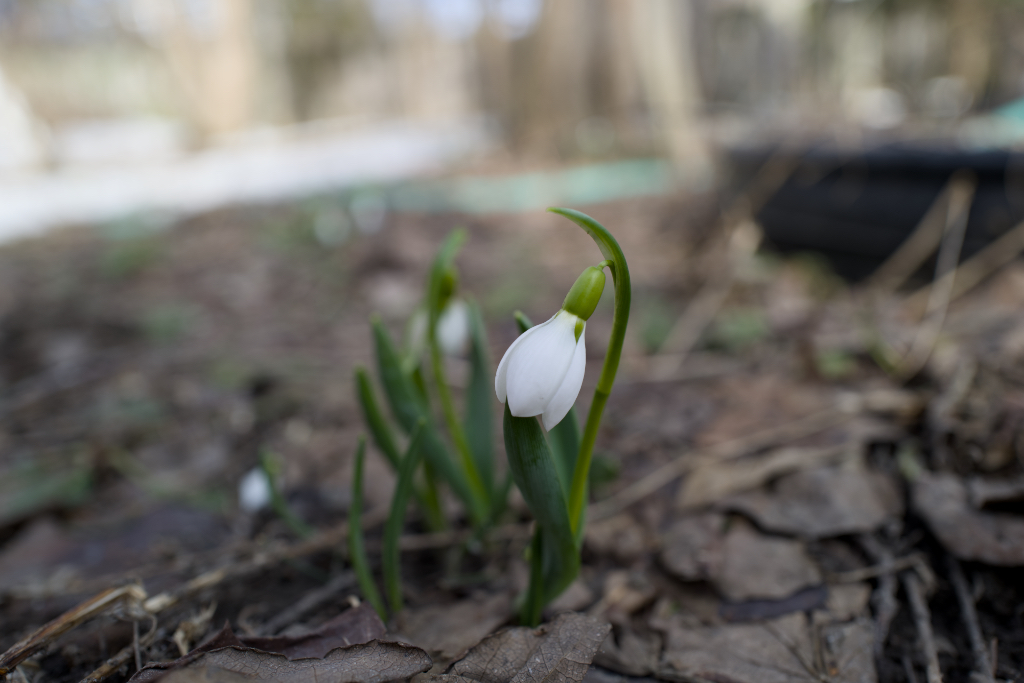
Snowdrop
Family Asphodelaceae
Day Lilies are probably grown in every garden in the town but it is only the ubiquitous orange form that is the true wild form of the species, even if it is non-native and arrived from Asia. It loves our roadside ditches. Orange Day-Lily (Hemerocallis fulva)
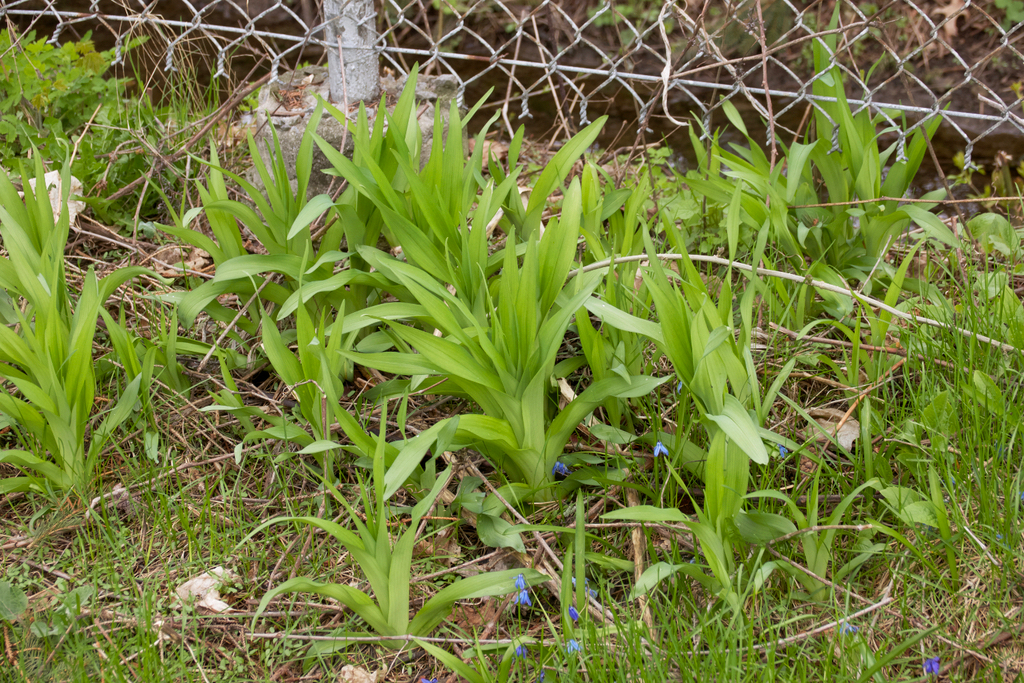
Hemerocallis
And that’s the end of Flowering Plants – on 7 January we will be moving on to start with BIRDS to get 2026 under way.

A brief bonus …
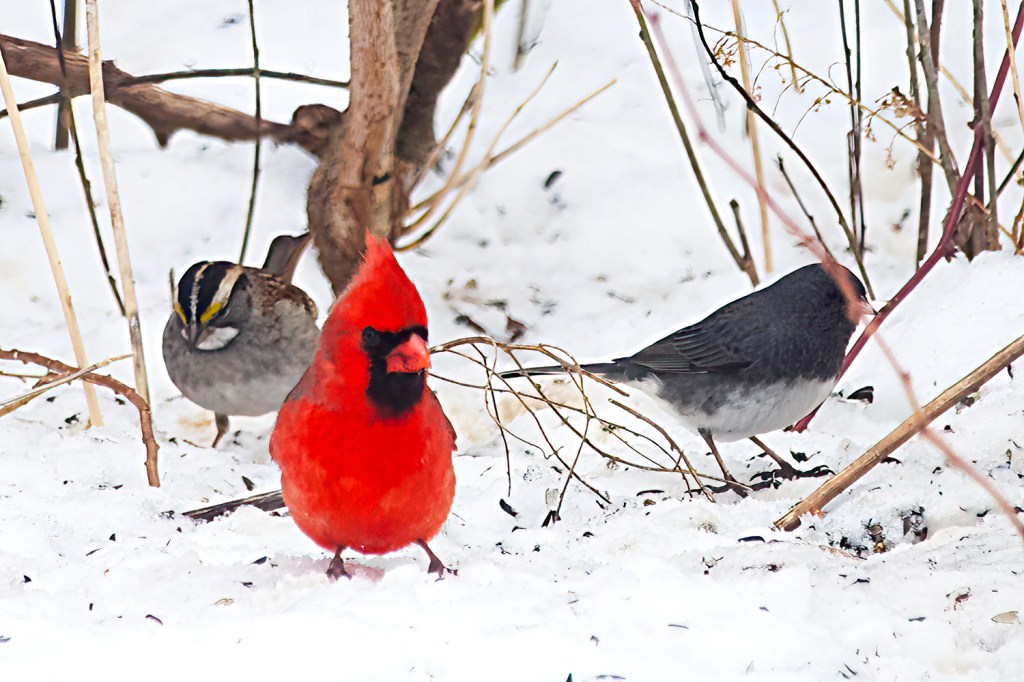
I am writing this from home on the western end of Montreal Island where winters can be pretty cold with lots of snow. In fact only two days ago a big storm came through and deposited the bast part of 2cm of freezing rain/ice which firmly put a stop to any thoughts of going out walking anywhere. Forecast for this first day of the new year is -19C with a windchill temperature of -27C. From the warm side of a window I caught sight of this female Northern Cardinal just in time to add to this post – while the bright red males might be the bird everyone notices, I have a liking for the more subtly coloured females.
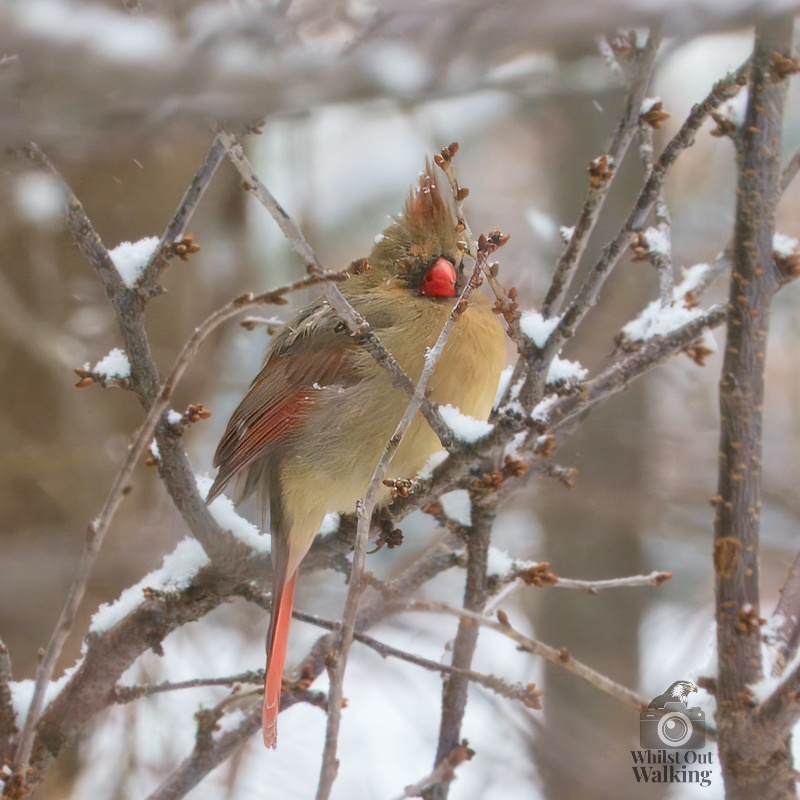
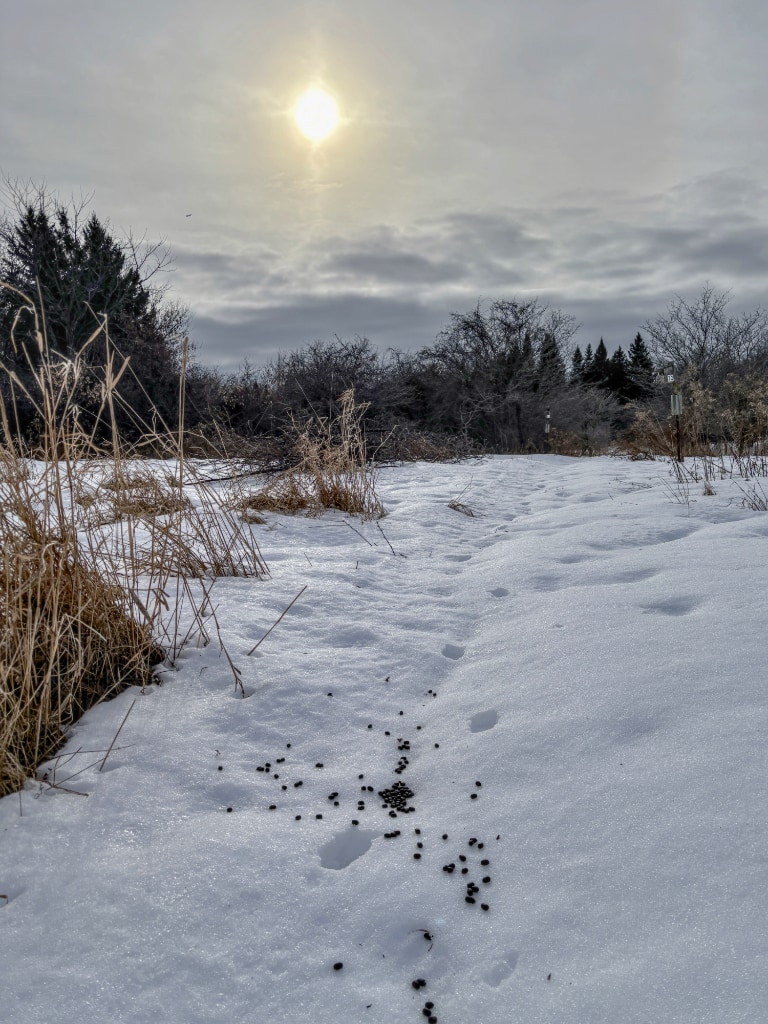
During the year to come you will see references to a bird banding research station just a few minutes drive from home. This is on land owned by McGill University and during the winter months, mid-November to the end of March usually, almost the only visitors it receives (the site is closed to the public) are my wife and I plus a couple of friends who strap on the snowshoes and go in to top up birds feeders and walk the trails to census the winter birds that might be found there. High quality walking and the whole site is ours and nobody else’s. Beautifully quiet with occasional overflying Ravens, Red-tailed Hawks and very occasionally a Northern Shrike perched on the top of a tree. Cold, but so worthwhile. This photograph is a corner of the research area taken on New Year’s Day 2025.
 Whilst Out Walking
Please leave a reply