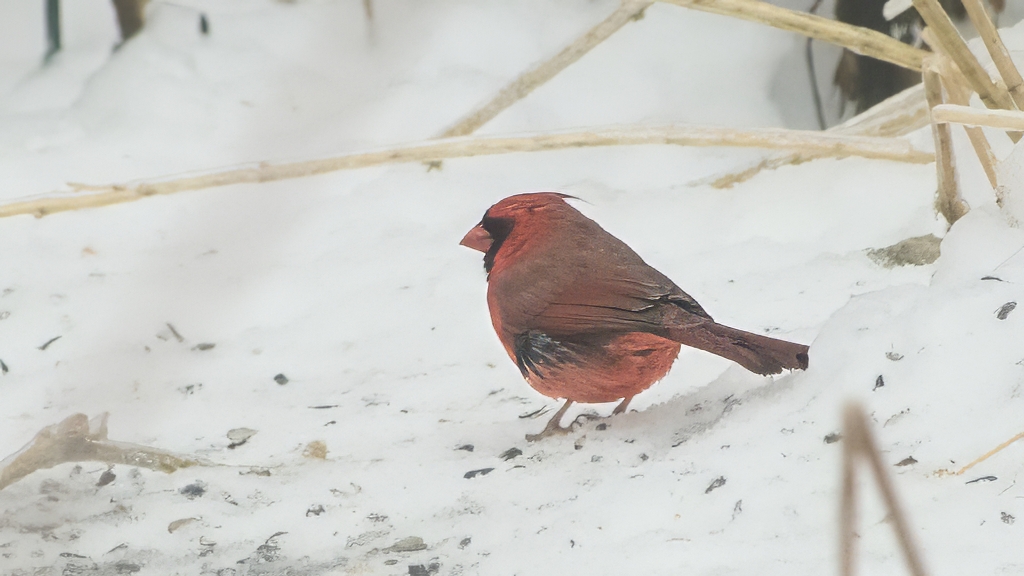
Enough Ice
The first 49 years of my life were spent in England, of which the 25 years prior to our emigrating to Canada were enjoyed in a village just south of Huntingdon and close to the edge of the fens. At about this time in most winters we would experience periods of dense “Freezing Fog,” which would cause cars to drive into roadside ditches due to not being able to see beyond the front of the car. Afterwards would leave the world bright and white with beautiful hoar frost on every branch and flower. An acceptable compensation.
I do not remember ever having encountered “Freezing Rain” though, something that came to my attention in the great ice storm of 1998 which happened shortly after I had committed to crossing the Atlantic and it was too late to have second thoughts (https://www.cbc.ca/news/canada/montreal/ice-storm-1998-1.4469977 ). Since then we have had several bouts of freezing rain each winter, usually manageable and only a couple of actual storms, the last of which being a year or two ago when we were without power for the best part of a week. Today we, and the garden birds, are enjoying some quite heavy freezing rain as a weather front sweeps through. I prefer hoar frost, but this is quite pretty too – if an inconvenience.
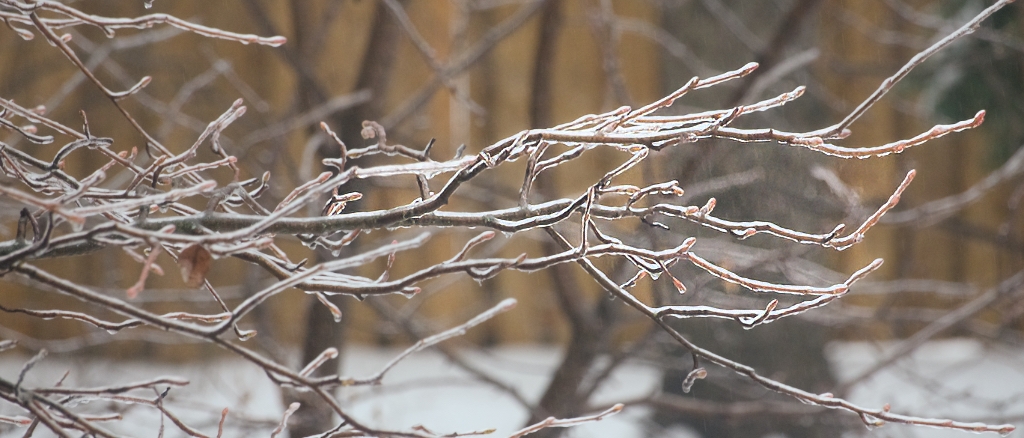
For my British friends, let me explain. Freezing rain is liquid precipitation that falls as rain but turns to ice on contact with surfaces that are already at or below 0 °C . It requires there to be a shallow layer of air above the ground is warm enough (above 0 °C) to melt any snowflakes or ice crystals falling from higher, colder altitudes, turning them into rain. Below that warm layer, a thin layer of sub‑freezing air lies right at the surface and as the rain passes through this cold layer, it becomes supercooled– it is still liquid but now below its normal freezing point. When these supercooled droplets strike objects that are at or below 0 °C—roads, trees, power lines, cars—they instantly freeze, forming a glaze of clear ice. This glaze can be very thick, is very heavy and, as happened in 1998, can even fell major power transmission pylons. It certainly fells trees. Maybe it does happen in Europe but I am unaware of it.
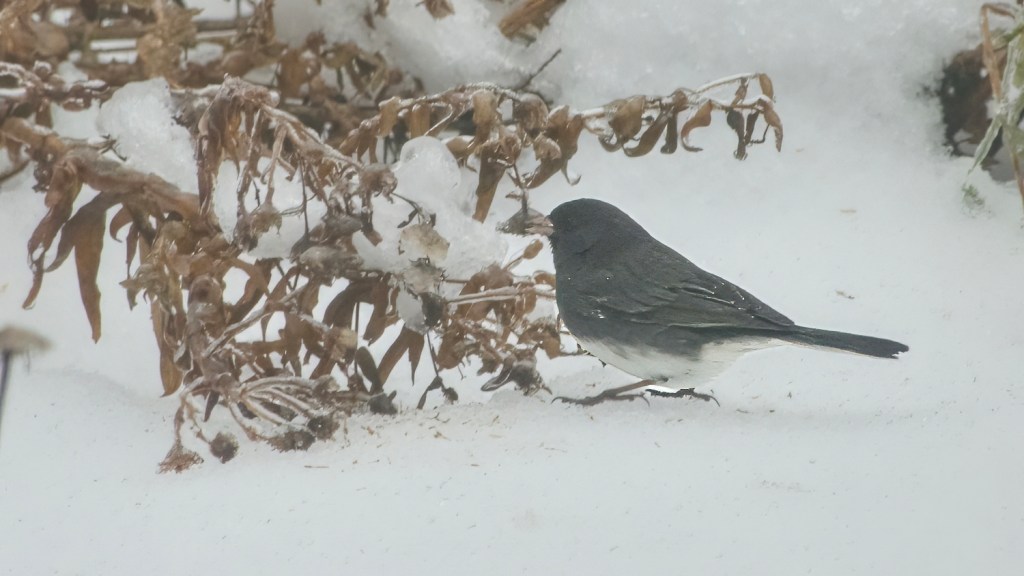
Meanwhile, here at the end of 2025, the birds are struggling to separate seeds from the ice.


 Whilst Out Walking
Please leave a reply